
Education
All you need is an iPad or phone, a toy and some patience. This is the guide the Tampa Animation Festival brings to school visits, starting with the 2026 Great American Teach-In, for students, families and teachers.


Take a picture, move your star a tiny bit, take another picture. Play them fast and your star comes alive! Each picture is called a frame. Animators often use 12 frames for every second of movie. That’s called the frame rate.
Stop Motion Studio Free
For iPad, iPhone, Android and Chromebook. Get it from the App Store or Google Play (made by Cateater). Some extras, like adding sound, are part of a paid upgrade. You don’t need them to make a great movie.
Ask a grown-up before you download any app.
What does your character want, and what gets in the way? Give it a beginning, a middle and an end. At 12 frames per second, a 5-second movie is 60 frames. That’s real work!
Open the app and start a New Movie. Put your star in place and keep your iPad or phone in the same spot the whole time.
Tap the capture button once. Keep your hands out of the frame.
Nudge your star just a tiny bit. Onion skin shows a faint “ghost” of your last frame, so you can see how far you moved.
Capture, move, capture, move. Small moves look smooth. Big moves look fast and jumpy.
What worked? What would you change next time? Then share your movie with your family.
Here are two frames from Familiar Faces, a stop-motion film by University of Tampa alumna Gina Bernardini that screened at the 2026 festival. They are a split second apart. What moved? How far did it move?
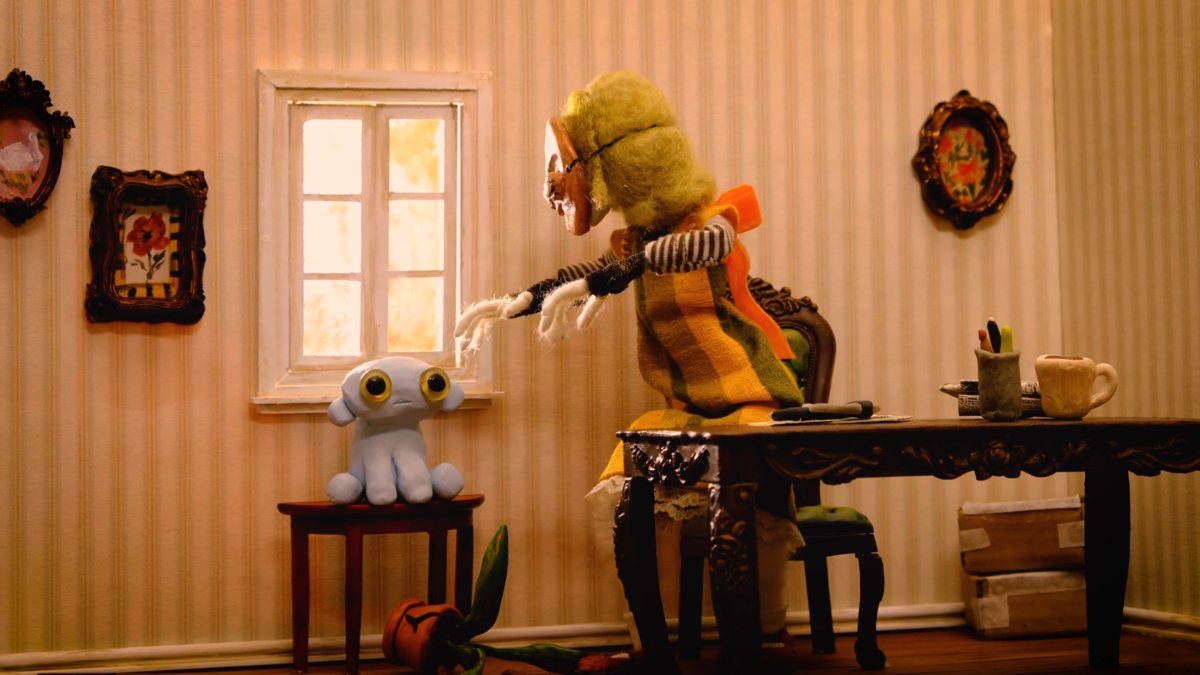
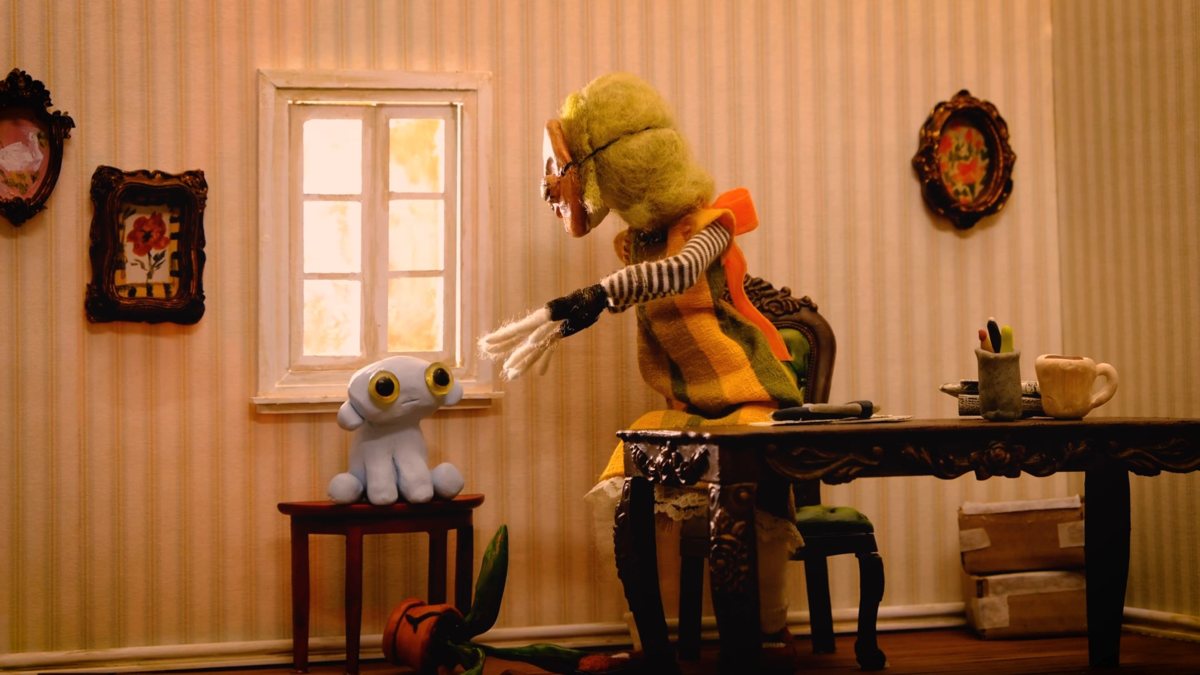
Two things moved. Her arm reaches a little lower and closer to the creature, and the little creature turns its head slightly toward her. Everything else stays still. Tiny moves like these, repeated frame after frame, are stop motion.
Animators sketch their story first. This is called a storyboard. Draw three boxes: beginning, middle and end.
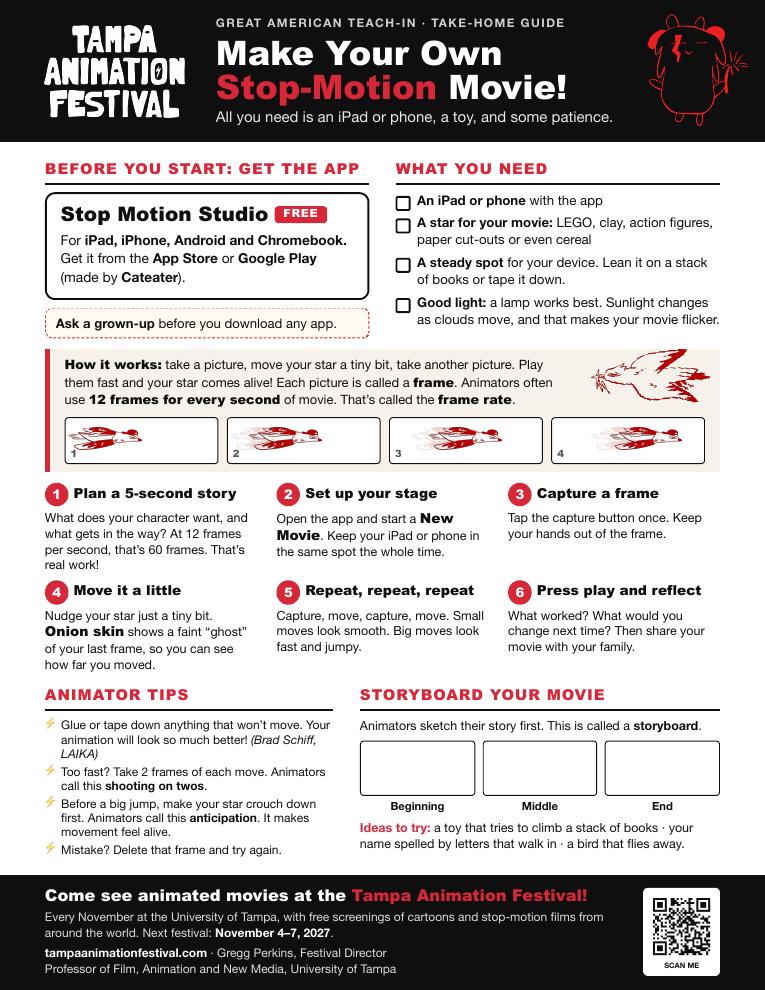
The one-page sheet we hand out in classrooms, with the app, the checklist, the six steps and a storyboard to fill in. Letter size, in color.
Download the PDF
Want the festival to visit your class, or bring a group to the festival? The Tampa Animation Festival screens animated films from around the world every November at the University of Tampa, free. Next festival: November 4–7, 2027.